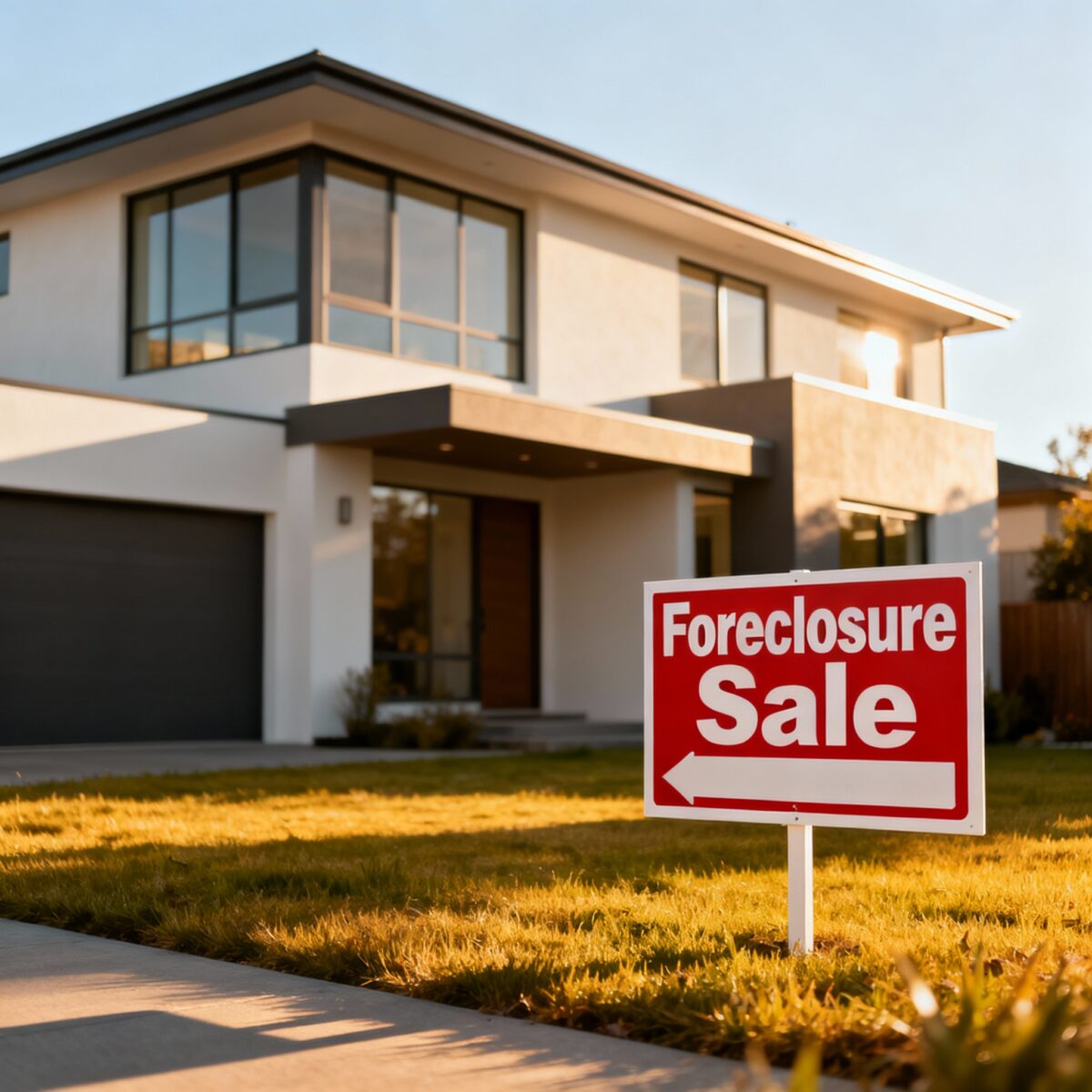
Banks sell foreclosures for a price that is usually lower than the market value of similar homes. You might be wondering how much lower and what factors decide the final price. The answer is not always the same, but there are clear patterns that help you understand what to expect.
How Banks Decide the Price of Foreclosures
Banks do not just pick a random number when pricing foreclosed homes. They hire real estate agents to assess the property and estimate its value in its current condition. The agents look at what the home is worth as-is, what it could be worth after repairs, and how much those repairs would cost. The bank then uses this information to decide if it is better to sell the home quickly as-is or to invest in repairs for a higher price later.
The bank’s main goal is to recover as much of their losses as possible. The original mortgage amount owed by the homeowner is rarely a big factor in the final price. Instead, the bank focuses on what will help them get the property sold and recoup their costs. Sometimes, if the bank makes more than enough to cover their expenses, the extra money might even go back to the original owner, but this is rare and depends on local laws.
What Makes Foreclosure Prices Lower
Foreclosed homes are usually sold at a discount compared to regular homes. On average, the discount can be around 7% to 10% below market value, but this can vary widely depending on the area and the condition of the home. The reason for the lower price is simple: banks want to sell these properties quickly. They do not want to hold onto them for long, so they often price them to attract buyers fast.
Another reason for the lower price is that foreclosed homes are often sold “as-is.” This means the bank will not make repairs or upgrades before selling. Buyers need to be ready to handle any repairs or issues themselves. The condition of the home can have a big impact on the final price. If the home needs a lot of work, the price will be lower to reflect that.
Factors That Affect the Final Price
Several things can change how much a bank will sell a foreclosure for. The local real estate market is one of the biggest factors. In a hot market, banks might be able to sell foreclosures for closer to market value. In a slow market, they might need to lower the price more to attract buyers.
The condition of the home is another major factor. Homes that are in good shape or need only minor repairs will sell for higher prices. Homes that need a lot of work will be priced lower. The location also matters. Homes in desirable neighborhoods or cities will usually sell for more, even if they are foreclosures.
Banks also look at feedback from buyers and agents. If a home is not getting much interest, the bank might lower the price to make it more attractive. If buyers are interested but not making offers, the bank might decide to fix up the home or lower the price to close the deal.
What You Can Expect When Buying a Foreclosure
If you are thinking about buying a foreclosure, you should know that prices can vary a lot. In some areas, you might find homes selling for 10% to 20% below market value. In other areas, the discount might be smaller, especially if the market is strong or the home is in good condition.
It is also important to remember that buying a foreclosure can come with extra costs. You might need to pay for repairs, inspections, and closing costs. Some banks require a larger down payment or have stricter lending requirements for foreclosed homes.
Real-World Examples and Trends
In 2025, foreclosure activity has been on the rise in some parts of the country, but overall rates are still low compared to historical highs. States like Florida, Nevada, and South Carolina have some of the highest foreclosure rates, which means there are more foreclosed homes available for sale in these areas. The average time it takes to complete a foreclosure has also decreased, meaning banks are selling these homes faster than before.
Here is a quick look at some recent foreclosure data:
| State | Foreclosure Rate (1 in X) | REO Count Q3 2025 |
|---|---|---|
| Florida | 814 | 762 |
| Nevada | 831 | 1574 |
| South Carolina | 867 | 2769 |
| Illinois | 944 | 5764 |
| Delaware | 974 | 470 |
| Texas | 1123 | 10584 |
| California | 1297 | 11207 |
| New York | 1621 | 5269 |
This table shows that some states have more foreclosed homes available than others, which can affect prices and competition.
Tips for Getting the Best Deal
If you want to get the best price on a foreclosure, it helps to do your homework. Look at recent sales of similar homes in the area to get an idea of what the market value is. Check the condition of the home and estimate how much repairs might cost. Talk to a real estate agent who has experience with foreclosures to help you understand the process and negotiate the best price.
Banks are usually willing to lower the price if a home is not selling quickly. If you see a foreclosure that has been on the market for a few months, it might be a good time to make an offer. Just be ready to act fast, because foreclosures can sell quickly when the price is right.
Final Thoughts
Banks sell foreclosures for less than market value to recover their losses and sell the homes quickly. The exact price depends on the local market, the condition of the home, and how much competition there is. If you are looking for a good deal, foreclosures can be a great option, but it is important to do your research and be ready for any extra costs or repairs.