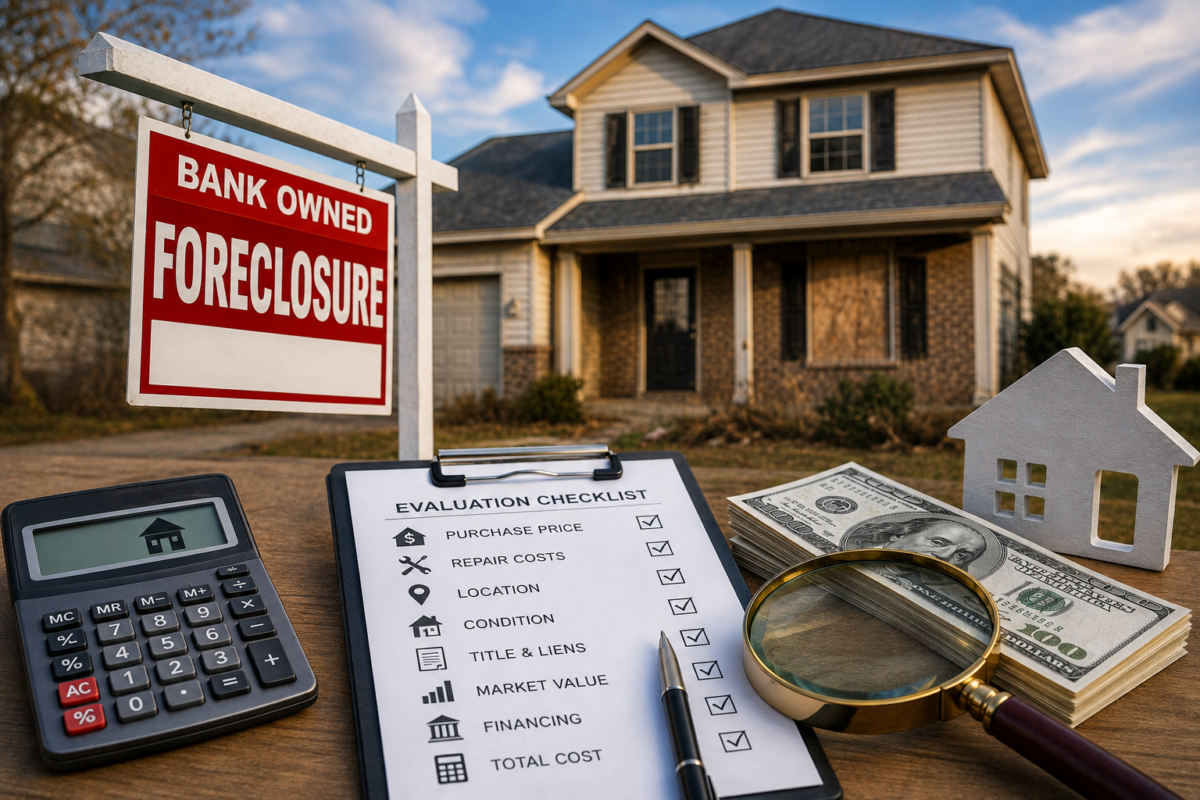
Bank-owned foreclosures can look like attractive bargains, especially when a home is listed below the price of similar properties in the area. But a lower asking price does not always mean a lower total cost. Repairs, unpaid bills, title concerns, financing issues, and long closing timelines can turn a seemingly good deal into an expensive project.
So, are bank-owned foreclosures worth it? They can be worth it for buyers who understand the risks, complete careful research, and have enough money and patience to handle unexpected costs. However, they may not be the best choice for buyers who want a move-in-ready home, a simple transaction, or predictable expenses.
What Is a Bank-Owned Foreclosure?
A bank-owned foreclosure is a property that a lender takes possession of after the homeowner fails to make mortgage payments. The lender usually tries to sell the home at a foreclosure auction first. If the property does not sell, ownership may transfer to the lender.
At that point, the home is commonly called an REO property, which means “real estate owned.” The bank or mortgage company then lists the property for sale, often with the help of a real estate agent.
Buying an REO property is different from buying a home directly from a homeowner. The seller is usually a bank, government agency, or mortgage company. The seller may not have lived in the property and may have limited knowledge about its condition.
Bank-owned homes are often sold as is. This means the lender may be unwilling or unable to make repairs before closing. Buyers generally need to inspect the property carefully and decide whether the price reflects the home’s condition.
Unlike buying a property at a foreclosure auction, purchasing an REO home usually gives buyers more time to inspect the property, arrange financing, order an appraisal, and complete a title search. However, the transaction can still involve more paperwork and uncertainty than a traditional home purchase.
Why Do Banks Sell Foreclosed Homes Below Market Value?
Banks are not usually in the business of owning and managing residential properties. Once a lender takes possession of a foreclosed home, it becomes responsible for expenses such as property taxes, insurance, maintenance, security, and possible repairs.
The longer the property remains unsold, the more it may cost the lender. For this reason, the bank may price the home competitively to attract buyers and recover as much of the unpaid loan as possible.
A bank-owned property may also need repairs because it was vacant, neglected, damaged, or poorly maintained before foreclosure. The lender may reduce the price to account for some of these issues.
However, a below-market price is not automatically a bargain. The discount may simply reflect the estimated cost of repairs, a weak location, an unusual layout, legal complications, or limited buyer demand. The important question is not just, “How much is the home discounted?” It is, “How much will the property cost after repairs, fees, financing, and ongoing maintenance?”
Potential Benefits of Buying a Bank-Owned Foreclosure
Lower Purchase Price
The biggest reason buyers consider bank-owned foreclosures is the possibility of purchasing a home below the price of comparable properties. A discount can help buyers enter an expensive market, increase their potential equity, or create room in the budget for renovations.
The actual discount varies widely. Some REO homes are priced close to market value, especially in areas with strong demand. Others may be priced lower because they require major repairs or have been vacant for a long time.
Buyers should compare the property with recently sold homes, not only active listings. A home listed for less than nearby properties may still be overpriced if those properties have better conditions, larger lots, updated systems, or stronger locations.
More Time for Due Diligence
Foreclosure auctions can require quick decisions and may offer little or no opportunity to inspect the property before bidding. An REO purchase is usually closer to a traditional real estate transaction.
Buyers may be able to:
- Visit the property before making an offer.
- Hire a professional home inspector.
- Request an appraisal.
- Review available property records.
- Order a title search.
- Arrange financing.
- Include inspection or financing contingencies, depending on the seller’s contract.
These protections can reduce the risk of buying a property with serious hidden problems. They do not eliminate risk, especially when the home is sold as is, but they give buyers more information before committing.
Possible Financing Options
A foreclosure auction often favors cash buyers because the payment deadline may be short and the property may not qualify for a traditional mortgage. A bank-owned home, on the other hand, may be eligible for conventional financing or certain government-backed loan programs.
The property’s condition is important. A lender may refuse to finance a home with major safety, structural, electrical, plumbing, or roofing problems. Some loan programs have specific property standards that the home must meet before closing.
Buyers should speak with a mortgage lender before making an offer. A lender can explain whether the property may qualify for the intended loan and whether repairs need to be completed before financing can be approved.
The Property May Be Vacant
Vacant properties can have advantages. Buyers do not usually need to negotiate with an occupant, wait for a seller to move out, or manage a complicated seller’s timeline.
A vacant home may also be easier to tour and inspect. Buyers can often examine rooms, storage areas, exterior spaces, and visible systems without disrupting the previous owner.
However, vacancy can also create problems. A home that sits empty may develop leaks, mold, pest infestations, frozen pipes, overgrown landscaping, or security issues. A professional inspection is especially important when a property has been unoccupied for an extended period.
Possibility of Renovation and Equity Growth
Some buyers purchase bank-owned homes because they want to renovate. If the home is structurally sound and located in a desirable area, improvements may increase its value and make it more comfortable to live in.
Renovation can include cosmetic updates such as paint, flooring, lighting, landscaping, and kitchen improvements. It can also involve expensive work, including foundation repairs, roof replacement, plumbing upgrades, electrical rewiring, or heating and cooling replacement.
The key is to estimate the total renovation cost before making an offer. Buyers should collect contractor estimates and include a reserve for unexpected expenses. Older homes often reveal additional problems after work begins.
The Main Risks of Bank-Owned Foreclosures
The Home Is Usually Sold As Is
When a bank sells a property as is, it generally does not promise to repair defects discovered by the buyer. The seller may also have limited information about what happened in the home before foreclosure.
An inspection may reveal problems with:
- The roof.
- Foundation or structural components.
- Plumbing and sewer lines.
- Electrical wiring.
- Heating and cooling systems.
- Windows and insulation.
- Water damage or mold.
- Appliances and fixtures.
- Driveways, fences, and drainage.
- Termites or other pests.
A buyer may still request repairs or a price adjustment, but banks often use standard addenda that limit negotiations. Some lenders may reject requests for minor repairs altogether.
Repair Costs Can Be Difficult to Predict
A damaged home may need more than cosmetic improvements. What appears to be a simple renovation can become expensive when walls are opened or old systems are tested.
For example, a buyer may plan to replace flooring but discover water damage underneath. A roof leak may have damaged insulation, drywall, wiring, or framing. A home that needs new paint may also require electrical upgrades before it can safely pass an inspection.
A useful approach is to create three repair estimates:
- The cost of immediate safety and habitability work.
- The cost of important repairs that should be completed within the first year.
- The cost of optional improvements and cosmetic upgrades.
Buyers should also maintain an emergency reserve. Spending every available dollar on the purchase and planned repairs leaves little room for surprises.
Competition Can Reduce the Discount
Bank-owned properties are not always overlooked. Investors, experienced buyers, and other bargain hunters may compete for attractive homes in desirable neighborhoods.
When several buyers submit offers, the lender may request the buyer’s “highest and best” offer. The property can sell for near market value or even above the original asking price.
Competition also makes it easier for buyers to overpay. The excitement of finding a discounted listing can cause people to focus on winning the property instead of calculating its real value.
Before making an offer, determine the maximum price based on comparable sales, repair costs, closing expenses, financing costs, and the desired amount of equity. Do not raise the offer simply because another buyer is interested.
The Process May Move Slowly
Banks often use asset managers, servicing companies, attorneys, and listing agents to handle REO properties. Offers may need to pass through several levels of review.
As a result, the seller may take longer to respond than a typical homeowner. The bank may request additional documents, change deadlines, require specific forms, or reject contract language that buyers commonly expect.
A delayed response can create problems with mortgage rate locks, moving plans, inspections, and temporary housing. Buyers should remain flexible and avoid making nonrefundable commitments until the purchase is more certain.
Title and Property Records Still Matter
A completed foreclosure may remove certain mortgage interests, but buyers should not assume that every possible title or property issue has disappeared. There may still be unpaid property taxes, municipal charges, homeowner association assessments, judgment liens, boundary disputes, code violations, or recording problems.
A professional title search can identify potential issues before closing. Buyers should also consider title insurance, subject to the terms and availability in their location.
It is also important to check public records for permits, past renovations, building violations, flood information, and property taxes. Requirements vary by state and local government, so buyers may benefit from working with a title company, real estate attorney, or qualified real estate professional.
How to Decide Whether a Bank-Owned Home Is Worth It
Compare the Total Cost
The purchase price is only one part of the financial calculation. Estimate the following costs:
- Purchase price.
- Down payment.
- Closing costs.
- Inspection and appraisal fees.
- Immediate repairs.
- Renovation materials and labor.
- Utility reconnection or deposits.
- Property taxes and insurance.
- Homeowner association charges.
- Mortgage interest.
- Temporary housing or storage.
- Emergency repair reserves.
Add these costs together and compare the result with the price of a similar move-in-ready home. If the total cost is only slightly lower, the traditional home may offer better value because it involves less risk and fewer surprises.
Evaluate the Location
A damaged home in a strong location may be worth considering. A cheap home in an area with declining demand, limited employment, poor transportation, or difficult resale conditions may be a weaker investment.
Study nearby sales, rental demand, schools if relevant to the target buyer, crime information from reliable local sources, planned developments, flood risks, and neighborhood conditions. A renovation cannot easily fix a poor location.
Understand Your Time and Skill Level
Bank-owned homes may be suitable for buyers who have renovation experience, access to reliable contractors, or enough time to manage a project. They may be frustrating for buyers who need to move quickly or have limited experience estimating repair work.
Ask yourself:
- Can I handle delays?
- Do I have money available for unexpected repairs?
- Can I manage contractors and permits?
- Do I understand the inspection report?
- Will I still be comfortable with the purchase if repairs cost more than expected?
If the answers are mostly no, a move-in-ready home may be a safer choice.
Steps to Take Before Making an Offer
Get Preapproved for Financing
A mortgage preapproval shows your estimated buying power and helps identify properties within your budget. It also allows your lender to review the property’s condition once you find a home.
If you plan to pay cash, keep enough funds available for repairs, taxes, insurance, and emergencies instead of using all your money on the purchase.
Work With an Experienced Professional
A real estate agent who has handled REO transactions can help explain bank addenda, offer procedures, deadlines, and required documents. A buyer’s agent may also help locate comparable sales and identify concerns in the listing.
Depending on the property and location, you may also need a home inspector, contractor, title company, real estate attorney, insurance agent, or environmental specialist.
Complete a Thorough Inspection
A general home inspection is a starting point, not a guarantee. Additional evaluations may be useful for the roof, foundation, sewer line, septic system, chimney, pests, mold, well, electrical system, or heating and cooling equipment.
Do not skip an inspection simply because the property looks attractive or the lender has already performed an evaluation. A bank’s valuation is usually designed to estimate market value, not provide a complete list of defects for the buyer.
Review the Contract Carefully
Bank-owned sellers may use their own purchase agreements and addenda. These documents may change inspection rights, closing dates, earnest money rules, possession terms, and the seller’s responsibilities.
Read the contract carefully and ask qualified professionals to explain language you do not understand. Pay close attention to deadlines because missing one may cause the offer to be canceled or the deposit to be at risk.
Calculate a Conservative Offer
Begin with the home’s likely market value in good condition. Subtract realistic repair costs, transaction expenses, holding costs, and a contingency reserve. The amount left should support your maximum offer.
This method is more reliable than choosing an offer based only on the bank’s asking price. The bank’s price may not reflect the property’s true condition or the cost of bringing it up to market standards.
Who Should Consider a Bank-Owned Foreclosure?
A bank-owned foreclosure may be worth considering for:
- Buyers seeking a lower purchase price.
- Investors who understand renovation and resale calculations.
- Owner-occupants willing to complete repairs over time.
- Buyers with strong financing or available cash reserves.
- People who can tolerate delays and complicated paperwork.
- Buyers who find a property in a desirable location with manageable defects.
It may not be suitable for:
- Buyers with no emergency savings.
- People who need a guaranteed move-in date.
- Buyers uncomfortable with construction projects.
- Anyone relying on a very tight monthly budget.
- Buyers who cannot inspect the home properly.
- People who are focused only on the advertised discount.
Are Bank-Owned Foreclosures Worth It?
Bank-owned foreclosures can be worth it, but they are not automatically good deals. The best opportunities usually combine a fair purchase price, a desirable location, manageable repairs, a clear title, and a buyer who has enough money and patience to complete the transaction properly.
The safest way to evaluate an REO property is to look beyond the asking price. Inspect the home, estimate repairs, review the title, compare recent sales, confirm financing, and keep a reserve for unexpected costs. If the total investment still makes financial sense after adding everything together, the property may be a worthwhile purchase.
In short, a bank-owned foreclosure is worth considering when the numbers work—not simply because the listing says “foreclosure.”